Alps “for dummies”: safety in the mountains for beginners in summer

This post is in cooperation with Grainau Mountain Rescue emerged.
The summer season in the Alps is hiking season, which is why we publish these tips, which are essential for safe mountain hiking.
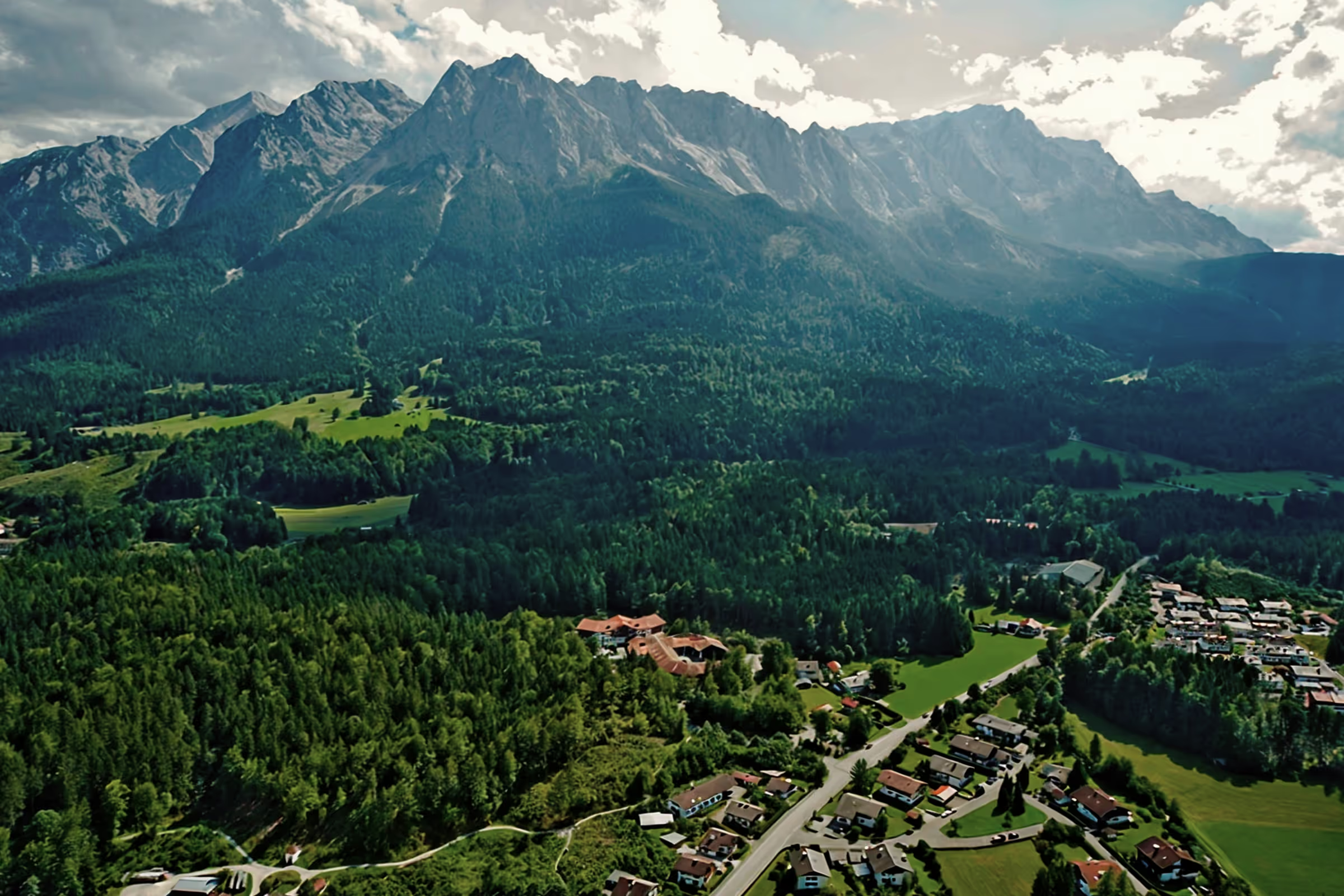
... It is 8:15 in the morning, the sun is shining at Garmisch-Partenkirchen train station. It's going to be a nice hiking day — and the Zugspitze cable car is full again. Tourists from all over the world wait at the Zugspitze railway station in front of the hub.

So many visitors want to go up to Germany's highest peak, including some mountaineers with backpacks and hiking sticks, but above all leisure guests in sneakers and families with babies and strollers. There are many guests who have never been to the high mountains before and only have the opportunity to see alpine mountains with their own eyes by train. It is usually easy to get there and back by train. However, it should not be forgotten that the mountains are a special landscape that sets its own rules. Bad weather conditions, strong winds and short-term weather changes can mean that normal operations are sometimes interrupted and, in rare but worst cases, visitors on the mountain have to be evacuated.

So that every visitor gets to know the Alps at their best, we would like to give you some advice and tips along the way. Prevent risks and be prepared.
Route planning
- Hiking maps or electronic hiking apps? Nowadays, all smartphone users have the opportunity to benefit from excellent hiking maps with hiking apps. However, you have to consider the two disadvantages of hiking apps when planning: poor local Internet connection and power consumption. Download the electronic hiking map for the selected route to your mobile phone in advance. In addition, you can bring a hard copy of a hiking map. Due to large amounts of data, hiking apps cause additional battery consumption. Many mountain huts do not offer their guests the option to charge their batteries, meaning that they no longer have a card after spending the night on the road — and, more importantly, no way to make an emergency call in an emergency. Just in case, it is recommended to bring power banks with you.
- Information from locals. Even if you have prepared your hike well, there may remain a few things that are not known to you. Feel free to get local advice from locals and heed their warnings.

equipping
If you had to plan a trip to the North Pole, what would be the first thing you think of? That's right: the cold. Only a madman would travel to the North Pole without warm clothes, you say. So why don't so many people think that the high mountains are also a tough environment? Some accidents reported to Bergwacht Bayern are due to poor equipment or incorrect behavior. You will be amazed or even shake your head when you meet one or the other visitor at the gondola: ladies and gentlemen strolling in flip-flops or high heels, beach pants and dresses. A family picnic away from signposted trails may also be planned. You should therefore wear the right clothes for every location. What would you say if someone strolled across the Kö or Ku'damm in ski clothes?

- Sturdy footwear. Mountain or hiking boots are a prerequisite for every hike. Sneakers and sneakers are not suitable shoes for the mountains — they are not enough even for easy routes! If you have a long distance ahead of you, don't forget to bring blister patches. Hiking sticks would also be desirable when descending to avoid knee problems — many inexperienced people get severe knee pain after just 500 meters of descent.
- Enough water & food. Bring enough water — at least 1 liter per person per 3-hour hike. Find out in advance whether there are mountain huts on the route and whether they are open on that day and at what time. If in doubt, take a snack with you. If you must drink natural water, remember that a clear stream often flows through cow pasture on its way down. You may then be looking for very small springs that spring directly from the rock. Many alpine plants produce beautiful fruits, but they are often poisonous. Do not eat berries that you cannot determine with 100% certainty. But low-hanging berries such as blackberries, strawberries or raspberries can also transmit dangerous germs.
- Warm clothes. Even though the weather forecast promises summer heat, you have to keep in mind that the weather conditions on the mountain and in the valley can differ significantly. In general, the formula applies: 8 degrees Celsius cooler for every 1000 meters of altitude difference. The temperature fluctuations of 15 to 20 degrees Celsius between day and night are also noticeable in the mountains: in summer time, 7-10 degrees is usually 7-10 degrees in the valley in the morning, and temperatures are 25 to 30 degrees during the day. Anyone planning an overnight stay in a hut must expect 0 degrees in the evening at an altitude of 1,600-1,900 m. It is best to wear eye-catching clothing on the mountain so that you can be found more quickly in an emergency. For longer trips, even in summer, pack a hat, gloves and a change of clothes (e.g. functional underwear).
- raincover. Rain and wind may make the hike impossible — due to low temperatures and increased risk of slipping (see below). Always bring a rain jacket or an umbrella for easier trips. It is better to turn around in time if you notice that the weather is changing or find a safe place where you can bridge a short rain shower. Note that the floor can quickly become slippery when wet.
- Helmet & via ferrata set. Check whether there are also climbing routes on the planned route. Then bring a helmet and a via ferrata kit. NEVER remove both safety devices on the via ferrata — always stay safe! There are via ferratas that are generally considered “easy”, so that many hikers overestimate their strength and run without a via ferrata set. This can result in fatal accidents.
- First aid kit You can buy the set at the supermarket or pharmacy.
- Sun protection & headwear. The radiation in high mountains is much stronger than in the valley and can damage sensitive skin in a short period of time. You should also wear a head covering when the sun is strong in order to avoid sunstroke.
- light Many city dwellers don't know darkness and assume that there is always a bit of light. But that is not true in the mountains: after sunset, it will be pitch black shortly. Be sure to watch the time and avoid being out and about in the dark. Bring a headlamp with you, even with spare batteries on longer trips. By the way, it is also essential when camping, when you have to set up camp in darkness. Even in an emergency, you can be found more quickly with a signal light.

weather conditions
- planning. When preparing, pay particular attention to weather conditions and storm warnings. Also check the weather conditions immediately before you start and possibly regularly on the go — rapid changes in the weather are possible in the mountains. It is best to postpone your hike if the weather is not good. If a storm comes suddenly and you still have to keep going (e.g. if you've already come to the end of the route or if you've booked an overnight stay in a hut), try to estimate the time remaining and remember possible hiding places along the way that you could reach quickly in an emergency.
- Increased risk of slipping when wet. Wetness in the mountains is more dangerous than in the valley. Stones and especially wooden steps on hiking trails become extremely slippery, so you have to walk on them with care. Narrow sidewalks in steep terrain should be avoided when wet, especially after continuous rain or in spring when there is still some snow in the high mountains. This allows the path to literally slide under your feet into the abyss! It's best to do your hike a few days later after the rain, when the trails are guaranteed to be dry and firm. Steep paths can often only be climbed from bottom to top when wet — then look for an alternative route in advance for the descent that is not as dangerous.
- Frost & icing. Due to differences in air pressure and temperature, the weather conditions below and above can differ significantly: what looks like fog below can come as drizzle at the top, which makes everything slippery. Rain in the valley, on the other hand, turns into snow at appropriate temperatures. Many hikers in high mountains are surprised by snow even in summer when the weather is bad — but they often don't have crampons with them and then have to be rescued by mountain rescue personnel due to slippery conditions. The same goes for glaciers, which melt in summer temperatures and become dangerously slippery.
- tidal waves. Heavy rain can cause mountain rivers and streams to swell instantly, particularly in constrictions such as canyons. Meter-high tidal waves can occur. In case of bad weather, avoid river beds and narrow valleys. Artificial reservoirs in the mountains and dams at the power plants can also be dangerous: under certain circumstances, the excess is quickly dumped into the valley. The areas below a dam must therefore not be entered and are not considered a picnic area.
- Rockfall. There can be many reasons for falling rocks. There is often a risk of falling rocks, especially when there are gusts of wind or next to limestone rocks. When planning your route, check whether the route you have chosen is hazardous to falling rocks and, if so, bring a helmet. The limestone decomposes over time due to the alternation of cold and heat, so that small pieces of stone can fall off some stone walls, e.g. in the midday sun or during summer heat. If you've triggered a rockfall — or have seen a rock fall from above — simply shout loudly: “Rock! “, so that the fellow hikers downstairs know that a stone is coming. Of course, you have to avoid going into the mountains when there is a storm warning.
- Avalanche danger. There is still a risk of avalanches at higher altitudes until the end of June. If you are planning an alpine tour, be aware of the snow situation on your route.

- thunderstorms. Thunderstorms are undoubtedly the most dangerous event in the mountains. The immediate danger of thunderstorms is not just lightning, although up to 100 people are struck by lightning every year in Germany. Of course, you may have to avoid hiking in thunder weather — so find out in advance at German Meteorological Service or download a thunderstorm app.
In reality, however, it is not always possible to estimate exactly whether the thunderstorm is coming or not, because the weather conditions for the formation of storm clouds can only be determined locally at very short notice. From May to July, thunderstorms are announced in Garmisch-Partenkirchen almost every afternoon — often with a 50% probability. It is best to start earlier and end the tour at lunchtime, as the typical summer thunderstorms usually occur early in the afternoon to evening. What to do when you are out and about in the mountains and there is a thunderstorm? Here The recommendation from alpin.de — just the most important points:
- Detect thunderstorms early and leave peaks as quickly as possible.
- Move back to the nearest possible hiding place — away from exposed or water-bearing areas.
- Don't hide under trees. Especially solitary trees can be struck by lightning. Keep a distance of at least 2 m from rock walls.
- Tents and small caves offer no shelter. Caves can be used for this purpose if they are large enough: the distance to walls and entrance must be at least a body length or more. You're only safe in a hut with a lightning rod.
- Groups are spread out.
- Remove metal equipment and crouch on insulating equipment (dry backpack, rope, etc.) with closed and tightened legs. The less contact surface there is with the ground, the better.
- Stay secure on the via ferrata with self-locking, tie to an iron clip rather than a wire rope.

Physical preparation and acclimatization
- Don't overestimate your powers. Most hiking trails in the Alps are well signposted and you can therefore estimate your time of arrival well. However, beginners are more likely to have to reckon with a longer period of time. Even if you are above average fit as a result of regular fitness training or swimming, this does not necessarily apply to mountaineering. It takes some time to get a feel for your right pace and possibilities.
- altitude sickness. Some people who come to the high mountains for the first time may experience altitude sickness, which in extreme cases can lead to cerebral edema. Possible symptoms include nausea, severe headache, and loss of strength. People with altitude sickness must be transported to the valley as quickly as possible.
- Don't leave signposted trails. There are many trails in the Alps, but only signposted trails are suitable for hiking. So never use the trails without signs or that are not marked on your hiking map. If you can't find a sign and are unsure whether you're making the right turn, turn around and look at the intersection from the other direction. This allows you to recognize the spot again (if you walk back a bit later) and know exactly which direction you need to continue in. If you've lost your way through an unmarked path and the trail has suddenly disappeared, don't go any fare—it can be dangerous. Then return to the spot that is clearly marked on your hiking map. Remember your location at any time — in an emergency, this is the most important information for emergency services.
- Alpine emergency number 112. In an emergency, call the rescue center — here Find the instructions for using the emergency line correctly. Pay attention to the “6Ws”:
- Where did the accident happen? That's what you need to know — the emergency services can't determine your location. Only after contacting the provider can the location be calculated with an accuracy of kilometers and it takes time. As I said, it's best to always remember the location — you can also do that with your smartphone.
- What has happened? Describe the accident in detail.
- How many injured people?
- What kind of injuries? Are there life-threatening injuries?
- Who reports the accident? How can I call back?
- Weather conditions at the scene of the accident?

Respect nature and leave no traces
Always take your trash with you to the valley and leave any place as you found it. This is particularly true for dog owners. Don't leave your dog's excrement in mountain forests. In animals, it is common to eat excrement from other animals. Dog droppings contain substances that do not occur in nature. Dog droppings are therefore poisonous to animals (especially cows) and plants and in doing so destroys their natural area in the long term. Please be sure to take the dog waste bag with you down to the valley. In addition, dogs are not allowed to run free in mountain forests — this can disturb wild animals.

We're all just guests in the mountains. Please help us to protect our beautiful nature!
We wish you all a great time in the mountains with fantastic views and impressions of nature.
Heartily Wellcome
at Lake Badersee