Alps “for dummies”: safety in the mountains for beginners in winter

This post is in cooperation with Grainau Mountain Rescue emerged.
Winter attracts millions of winter sports enthusiasts and tourists to the Alpine region. The snow provides the basis for unique winter experiences in the Werdenfelser Land region. Here are a few safety tips for our guests who ski, go on a ski tour or go on snowshoe hikes during their winter vacation.
In the ski area

Garmisch-Partenkirchen offers winter sports enthusiasts two ski areas: Garmisch-Classic and Zugspitze. According to Bergwacht Bayern, there were around 850 ski accidents on the slopes in the entire Garmisch-Partenkirchen ski season alone in the 2017/2018 ski season. It is also remarkable that the proportion of serious accidents is increasing over the years. It is therefore all the more important that every skier is aware of the risk and follows the safety instructions in the ski area.
equipping
The first thing you pay attention to when skiing is the right ski equipment and warm clothing. A helmet is highly recommended when skiing. Take your health insurance and ID with you. For safety reasons, backpacks are not permitted on chairlifts, with the exception of very small flat backpacks.
Closing times
Of the two ski areas, only Garmisch-Classic A descent into the valley — that means that at the Zugspitze you have to pay attention to the closing times and arrive in good time for the Zugspitze train station or the gondola.

Safe on the slopes
As a beginner, you'd rather look for easier descents — for example, you should take the famous kandahar Avoid it for now. On the slopes, remember that in the event of a collision, the skier who was higher on the slope (and therefore probably had a higher speed) is always responsible. This is because when skiing, you no longer have an overview of yourself from the top. If you need to stop right at the slopes and take a short break, it's best to do it on the side of the slopes or, if you have to stay in the middle, look for a spot that is clearly visible from above (i.e. not on a steep slope that immediately follows a flat spot!). When downhill, it's best to take smaller turns without crossing the entire slope at once, so that your path crosses less with faster skiers.
Dangerous areas
Sometimes the ski slopes are laid out in such a way that they intersect with ski lifts or toboggan runs. Special care is required at such places, which are usually specially marked with road signs. Especially on the Zugspitze, accidents occur again and again below the toboggan run. Never travel on closed slopes — there is a risk of life due to snow conditions or the use of winches.
Avalanche danger
Avalanches are also possible in the ski area. So don't leave the slopes when downhill and pay attention to the restricted areas — slopes and slopes may be closed at short notice due to increased avalanche risk or explosions.
Accident in the ski area?
If an accident happens and you are there, first secure the scene of the accident: Make a sign of crossed skis or sticks on the slope about 10-15 meters above the scene of the accident. Then you have to check whether the person is injured or whether they can continue driving on their own. When in doubt, don't wait too long before making a decision — don't leave the injured person lying in the snow for long, especially when it's slowly getting dark.

If help is needed after all, call the mountain rescue team as soon as possible under the Alpine emergency number 112. You are now using existing clothing and objects (skis or snowboards, backpacks) to minimize contact with snow and thus prevent heat loss. When the mountain rescue team arrives, they help provide the information you need when needed. After that, the injured are usually either downstairs with the Akia and then transported by ambulance to the hospital or, depending on the type of injury, by helicopter directly to Emergency clinic in Partenkirchen or to Trauma Clinic Murnau brought. In case of minor injuries (e.g. shoulder dislocation), you can report to the Bergwachthütte yourself and receive first aid — with the obligation to visit a doctor soon. Mountain rescue stations are marked on the trail map.
Away from the slopes
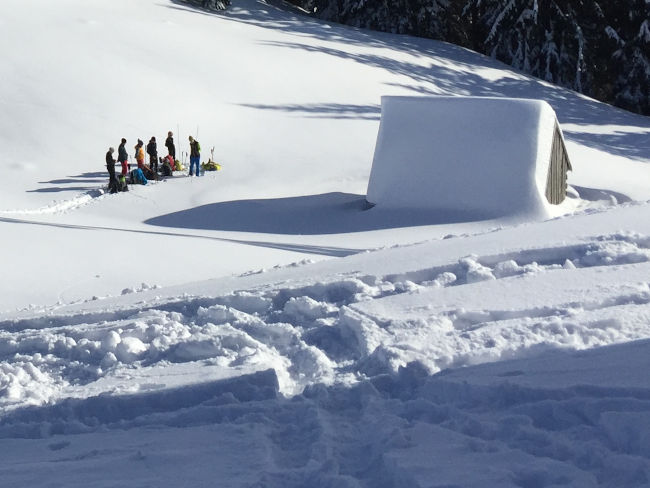
Ski tours, winter hiking, tobogganing, winter mountaineering, ice climbing — that's how diverse is the Snow fun in the Bavarian Alps. However, snow can be dangerous, particularly with increased amounts of snow or after a snowfall. When you visit Garmisch-Partenkirchen, you are not entering the snow-covered mountain landscapes alone. Of course, you can easily use the well-known and well-marked Winter hiking trails use in the valley or in the ski areas. For all other winter activities, it is best to get advice from the locals or join a guided group. Local mountain guides know the terrain and can correctly assess the avalanche risk.
There are some beautiful ski tours in the Garmisch-Classic ski area. The following apply here DAV rules for ski tours on the slopes.
Here you can find out more about guided winter hikes and high-alpine winter tours:
- Winter hikes in Grainau - Tourismusamt Grainau
- Winter hikes - Garmisch-Partenkirchen Tourist Office
- Alpenverein Sektion Garmisch-Partenkirchen
- Guided mountain hikes - Alpinschule Garmisch
- Zugspitze Mountaineering School

orientation
Don't rely entirely on your mobile phone — the battery quickly runs out when it's cold and there is no signal in many places. Bring a map and compass. Let others know in advance about your hike or ski tour: when and where you're going, or when you're planning to return. On the way, it's best to stick to the route marked on the map — this will usually avoid danger spots. If in doubt, turn around in time. Always remember your position on the map — this is the most important information during rescue operations.
Observe weather and avalanche conditions
In winter, it is even more important than in summer to pay attention to the weather conditions. Current information on snow depths, wind conditions and temperatures is available daily from Avalanche Warning Service Bavaria (resp. Avalanche warning services Tyrol) and with German Meteorological Service. Unfortunately, spillage accidents are also possible at lower avalanche risk levels — due to local snow accumulation, even up to the end of June. On tour, always pay attention to snow conditions, even when you are in the ski area.

equipping
During longer mountain tours in alpine areas, it is extremely important to stay warm and dry and to drink enough. Be prepared for changes in weather and significant temperature differences between mountain and valley or between day and night. Of course, you need good hiking boots, warm but lightweight sportswear, food and drinks. It is best to wear eye-catching clothing so that you can be found more quickly in an emergency, and bring a safety vest with you. Ski touring equipment can be rented in Garmisch-Partenkirchen (e.g. here or here). Depending on the type of tour and weather conditions, crampons, crampons, ice axes on icy surfaces and snow firn are recommended — your mountain guide will be happy to advise you on this. It is recommended that you bring the following at most:
- First aid kit with Emergency blanket
- headlamp or flashlight, spare batteries
- sunglasses
- sunscreen
- Change of clothing (e.g. functional underwear)
- Hiking sticks are essential when descending
- 2nd pair of gloves

avalanche equipment
More than 90% of all avalanches are caused by victims themselves induced. For high-alpine winter tours, you primarily need a qualified mountain guide, which also requires personal avalanche equipment and training for the entire group. LVS device, avalanche probe and snow shovel — using these three devices correctly can save lives. Can doesn't mean you have to: without regular practice, this equipment remains useless, as you only have a few minutes after the avalanche to find and rescue the buried person. A successful rescue operation is only possible if each group member is specially trained in terms of safety and organization for avalanche rescue. Take part in avalanche training with your group before the tour. Before you enter the unsecured area, open your avalanche device and carry out a safety check on each device.

Accident off the ski slopes?
An emergency situation in high terrain is all the more dangerous in winter that the low temperatures and shorter duration of the day mean that you have less time for a search and rescue operation. Snow cover, wind and icing also make many areas at higher altitudes inaccessible. If an accident happens in your group, immediately activate the Alpine emergency number 112. Call the rescue center — here Find the instructions for using the emergency line correctly. Pay attention to the “6Ws”:
- Where did the accident happen? That's what you need to know — the emergency services can't determine your location. Only after contacting the provider can the location be calculated with an accuracy of kilometers and it takes time. As I said, it's best to always remember the location — you can also do that with your smartphone.
- What has happened? Describe the accident in detail.
- How many injured people?
- What kind of injuries? Are there life-threatening injuries?
- Who reports the accident? How can I call back?
- Weather conditions at the scene of the accident?
In the meantime, do not leave the injured person lying in the snow or on bare rock and freeze — then use your emergency blanket (silver side inwards!) and use existing clothing and objects — such as skis or snowboards, backpacks — to minimize contact with snow and thus prevent heat loss. If there is a strong wind, dig a pit in the snow for the injured person.
If possible, find a suitable landing area for the rescue helicopter. Then stick your skis in the snow, put on the safety vest and give signals with a flashlight or a mirror. With a suitable GSM connection, it is sometimes possible to stay in touch with the rescue service via mobile phone and give instructions to the pilots. The better you can describe the scene of the accident and draw attention to yourself, the higher the chance of being rescued.
In the end, however, we want nothing to happen and that you enjoy your winter sports to the fullest.
Enjoy your winter vacation with us!
Heartily Wellcome
at Lake Badersee