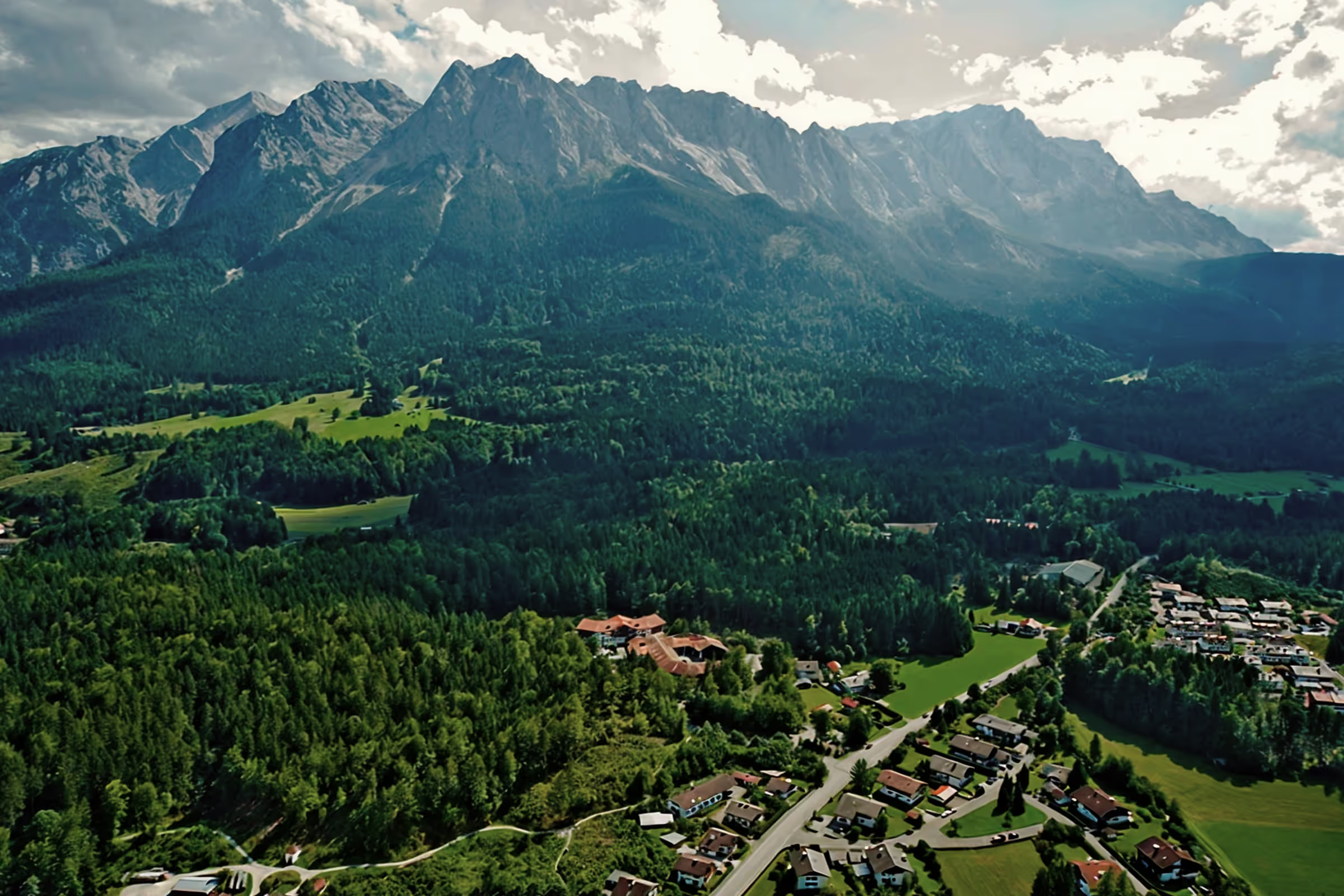
A perfect day in Grainau: Climbing the Alpspitze part 1 - round trip via Alpspitz-Ferrata, Ostgrat & Nordwandsteig
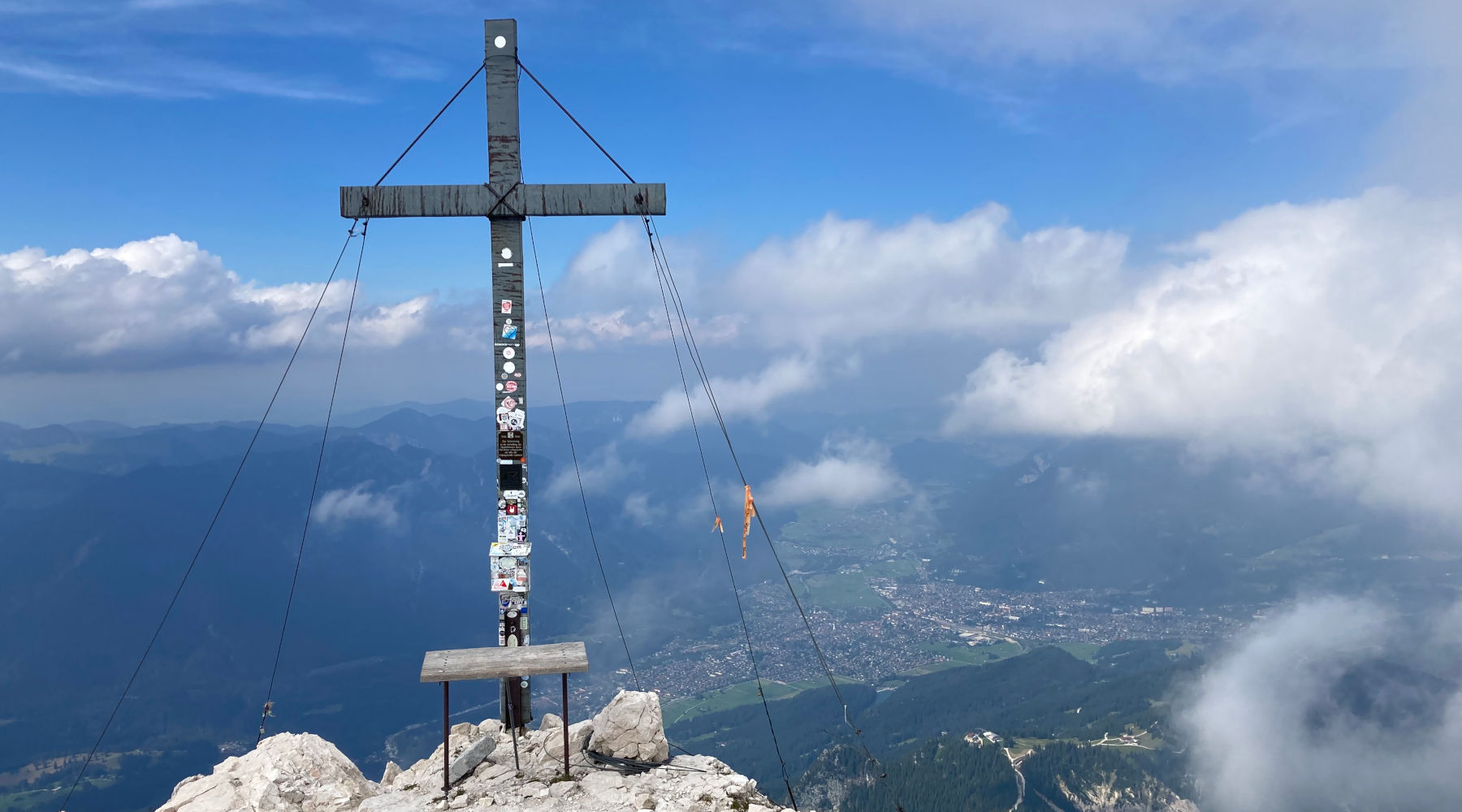
Climbing the Alpspitze (2,628 m above sea level) is possible in summer via several routes. Depending on how many meters in altitude you want to overcome, there are numerous opportunities for hikers at the Alpspitze to extend or shorten the routes and diversify them with side activities. Starting at Kreuzeck, in Hammersbach, at the Hausberg or even in the Partnachklamm gorge, mountaineers have a dozen options to reach the popular summit.
Since the selection is so wide, we describe two routes here in the Badersee blog — a moderate tour for beginners with initial experience and a difficult tour for experienced mountaineers. At around 600 m, the popular Alpspitz-Ferrata (via ferrata A/B) is considered the easiest route on the Alpspitze. The challenging (2,100 m) circular hike from Hammersbach across Höllental, Mattheisenkar (via ferrata B/C), Alpspitze peaks and beauties (via ferrata A/B), on the other hand, makes every mountaineer's heart beat faster.
Part 2: Circular hike across Höllental, Matheisenkar, Alpspitze & Schöngänge for experienced
Climbing the Alpspitze via the Alpspitz-Ferrata, Ostgrat & Nordwandsteig with cable car support
Tour profile
Difficulty level: medium (experienced hikers) to difficult (beginners with previous knowledge)
Route length: approx. 4 km
ascents: 600 hm
descents: 600 hm
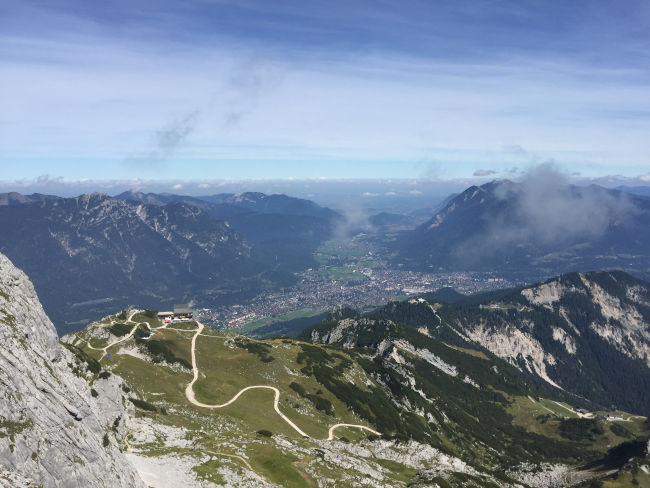
It is a lovely Sunday afternoon in July. My tour today goes past the Alpspitze summit and on down into the valley. It is perfect hiking weather, there is no cloud in the sky, it is also a bit cooler up here than in the valley, where there is summer heat today. In front of me lies the steep, gravelly east ridge. In the middle of the slope, I see a small group of tourists from East Asia taking a break here. The boys are talking to each other and seem to be enjoying the trip. The two girls are sitting next to the rocks. They're wearing brand-new white sneakers, trendy shorts and tops and don't seem to have anything with them anymore. As I pass by, they greet me with a sad look. It is 4:40 p.m. Stop! What happened here?
When I start talking to the tourists, they themselves do not know that something has gone wrong. They still believe that they will make it to the last mountain railway. Will that work? I suggest that we descend together for a few hundred meters. From the very first steps, it becomes clear that the descent will be extremely difficult for the girls. I hand out my walking sticks to both young ladies, but we're still only moving slowly. Then I'm afraid I'll have to tell my new acquaintances the truth. You have to descend 2,000 meters in altitude down into the valley — or spend the night on the mountain. Alternatively, they can make an emergency call, but without insurance, rescuing them from mountain distress can be expensive.
How did it come about that the group got into an emergency situation? Let's try to see the circular hike across the Alpspitz-Ferrata from the perspective of non-mountaineers.
The start
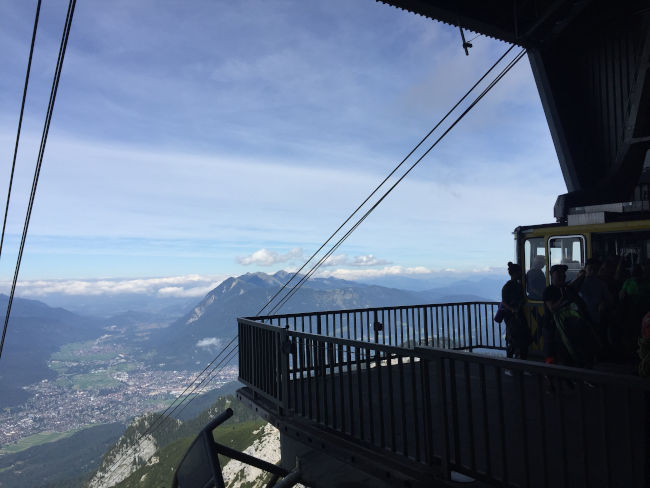
For many hikers, climbing the Alpspitze starts at the Zugspitze railway station in Garmisch. Take the train to the “Kreuzeck — Alpspitzbahn” station, then take the Alpspitzbahn gondola up to the Osterfelderkopf mountain station (2,033 m). This saves 1,300 meters in altitude - from here only about 600 meters remain until the Alpspitze summit.
Many guests in Garmisch-Partenkirchen have heard of the Alpspitz-Ferrata. In most media, the Alpspitz-Ferrata is presented as an easy day trip, which is also suitable for children and beginners. This is only partly true: for experienced mountaineers, climbing the Alpspitze really shouldn't be a problem. However, visitors who have no alpine experience at all come here every day. It's not a big problem at 1,500 m above sea level, but not at 2,500 m! The mountains are a tough environment and not a tourist attraction. Read in our blog, what you should consider in high alpine terrain and what equipment you need. Here are a few relevant points:
- Hard time planning: The route is accessible from around mid-June to October, weather permitting. The time entered in many places of 4 to 4.5 hours is only realistic for experienced mountaineers. Plan significantly more time — preferably the whole day! — and take the first train up. Ask the train when the last descent is — operating hours in summer differ from month to month. Anything can happen on the mountain, so you should accept that you might have to descend on foot after all — you need an emergency plan here. In practice, this means that anyone who does not reach Oberkar before 3:30pm would have to descend 1,500 m on foot into the valley or spend the night in Kreuzeckhaus.
- equipping: Good hiking boots, helmet and via ferrata set, walking sticks for the descent as well as a headlamp, warm clothing and a rain jacket, should something go wrong, you should definitely bring them with you.
- rations: Water and sufficient supplies are included as an emergency reserve, regardless of whether there are mountain huts or restaurants on the route.
The climb
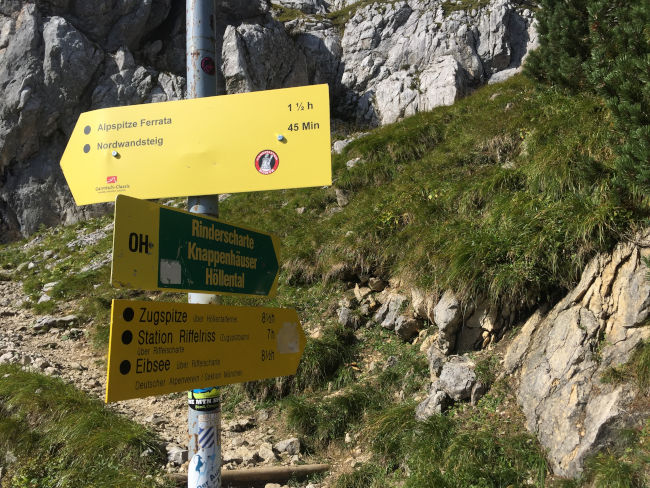
From the mountain station, follow the signs to Alpspitze and Ferrata for about 30 minutes. The via ferrata, which is actually very well secured and rated as “easy” (A/B), is very pleasant when climbing up. Hikers with “normal” fitness levels are usually at the top in about 2 hours. The route is also well marked and the route is easy to find, making orientation on the way to the summit relatively easy.

My acquaintances say that they started at Osterfelderkopf at 10 o'clock in the morning. After they found the route relaxed according to descriptions on the Internet and the weather forecast looked so good, they did not take any additional equipment, food or warm clothing with them in addition to the via ferrata set and helmet. They had already had positive experiences with other hiking tours with around 500-600 m altitude, so they believed that the Alpspitze would be just as easy. They had also tried climbing in the climbing hall earlier, so the climb over the Ferrata was easy for everyone. When they reached the summit cross, everyone was completely impressed!
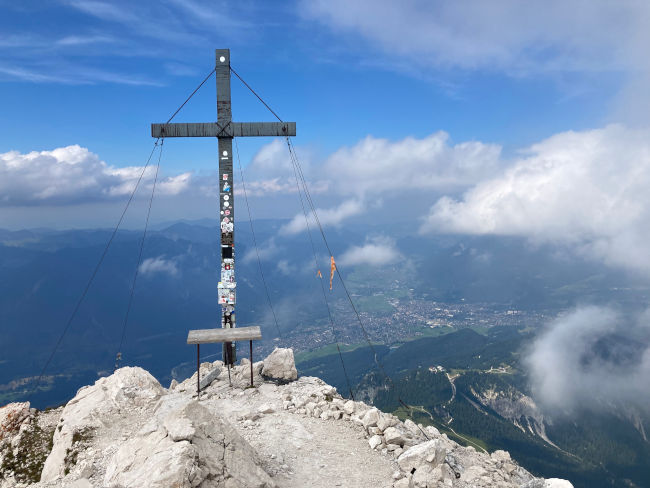
In reality, the weather can't always be as perfect as it is today. Clouds create strong cold winds, and above a certain altitude, there is always a “summit wind” at the summit. So it makes sense to pack a fleece and wind/rain jacket for every tour. When the weather changes, temperatures can drop within an instant. Even the metal steps on the ferrata can become icy or extremely slippery when wet. Take note of our Safety notes and immediately before the tour, check the weather report.
But bad weather also has its advantages — especially for experienced mountaineers. Because when the weather is bad, the Alpspitz-Ferrata is not so popular. Otherwise, there are often crowds here and you have to be prepared for long waiting times, as overtaking is not possible on many routes.
The descent
The summit photos have been taken and after a (hopefully, weather permitting) break at the summit cross, we should continue. But where?
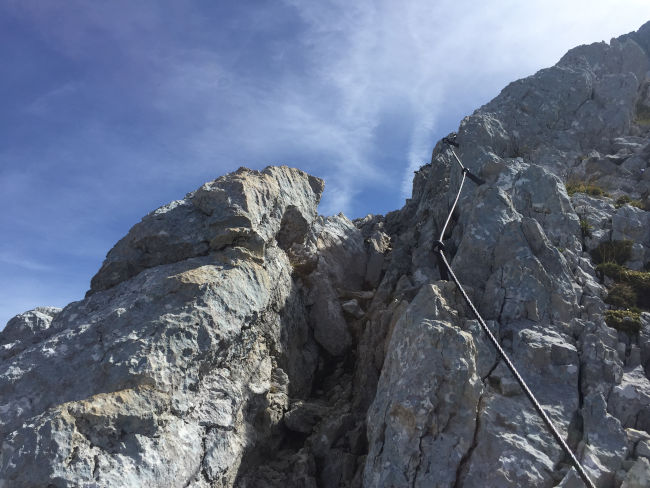
The Alpspitze summit is flat and wide. The paths are not so easy to find due to the scattered boulders and gravel. Should one or the other cloud hang on the summit, finding the way and finding your way in the fog becomes a challenge. Especially for less experienced hikers who have never been in alpine terrain at such heights. The signpost is at the actual summit point, which is about 50 m behind the cross, just above. There are two options available here: straight ahead towards Grießkarscharte, Höllental and Jubiläumsgrat or left towards the Ostgrat. Don't go in the wrong direction here — the Jubiläumsgrat is one of the most demanding routes in the Eastern Alps. But apart from that, the descent route across the Eastern Ridge is a search for clues. In the middle area, the trail contains secured sections from which hikers staying in the right lane can benefit. However, many descend hopelessly through the crags — and lose time and energy as a result.

Finally, you reach Oberkar, a wide area of gravel below the eastern flank. Here again, several paths and detours lead through the gravel, so you have to look for signs. From Oberkar, you should take the Nordwandsteig towards Alpspitzbahn and Osterfelderkopf. Although the trail is relatively flat, it can be endangered by rockfalls or (in June, in autumn or in rainy weather) avalanche snow.
You have to remember that climbing up steep terrain is easier and faster than climbing down. The length of the descent also depends on whether you have suitable equipment and sufficient experience in alpine terrain with boulders. What can you do if you notice that the descent is extremely difficult? Our tip: Identify it early on. Then go back to the summit cross and descend again via the Alpspitz-Ferrata. The descent via a rope-secured via ferrata is faster and easier than through gravel.
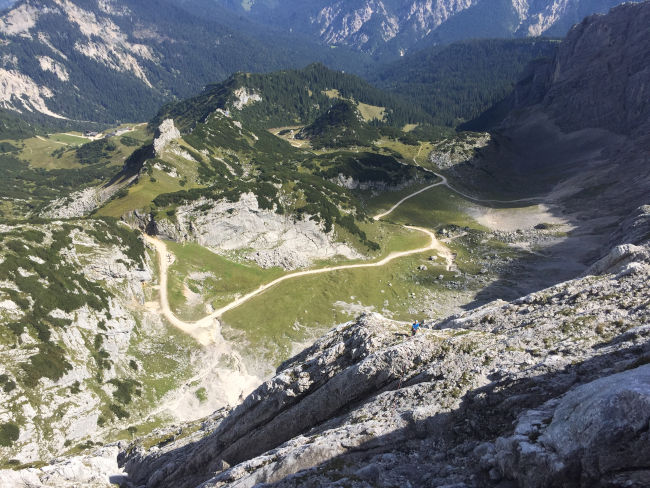
It looks bad for beginners with sneakers and without sticks, like my acquaintances today. What happened next with the group?
How an ascent of the Alpspitze ends with a rescue operation for tourists
5:00 p.m.: I cannot leave the group in an emergency and will continue to accompany them. It doesn't make sense for us to climb back to the cross anymore, as the point where I found the tourists is about 300 meters below the summit. In times of stress, we lose track of the Eastern Ridge and can no longer use the other rope safety devices. The two girls in particular have to laboriously climb every rock. At some point, people cry and confess that they can't go on anymore. We have to convince the poor that unfortunately we have no choice and that further breaks on the rocks won't do us any good, as it will soon be dark. It was definitely the worst day of her life! Time flies, the sun is leaning west, it is slowly getting cooler and none of the tourists have warm clothes with them.
7:30 p.m.: We are only at Oberkar after 3 hours. We will also take a longer break here so that everyone can regain their strength. The group has no map and is therefore disoriented. The further hike to the Osterfelderbahn is of no use to us anymore. After things have gone better with the tightrope up, we opt for the Schöngänge via ferrata to descend straight to the Hochalm before it gets pitch black. The food from my emergency reserve is used. We hand out a large apple and the nut bars for everyone so that everyone gets a few calories before continuing down. In about 30 minutes, we reach the Bernadeinsattel.
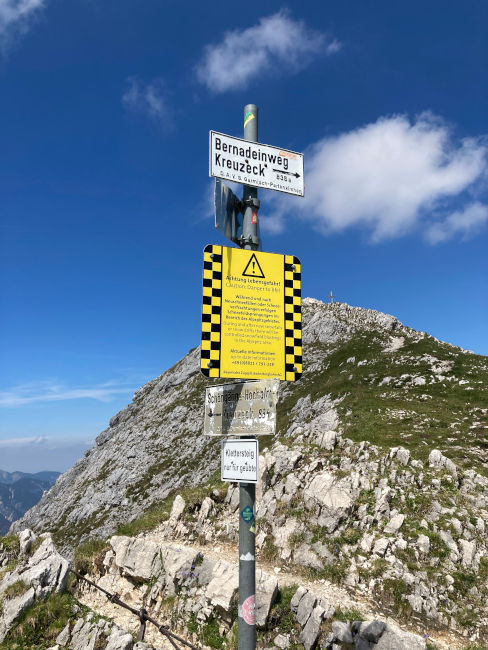
8:00 p.m.: I accompany the girls and show them the best way to climb down every step of the way. That goes well and after about 40 minutes we reach the end of the rope-secured stretch of the Schöngänge. And then there is another steep scree field! The debris here was never a problem for me, so I didn't think of that. It continues laboriously down at a snail's pace; it takes us significantly longer here than with a wire rope. Twilight is getting thicker and the stars are already shining in the sky as we reach the signpost on the ski slope to the Hochalm.

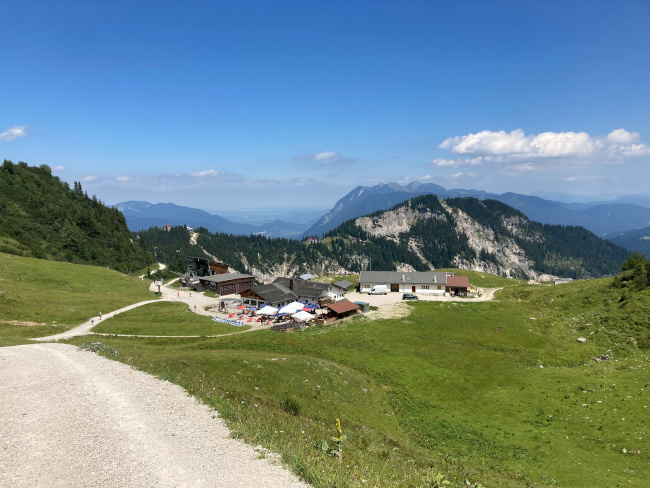
10:00 p.m.: The Hochalm is not far away from here. Luckily the moon is coming out, so we don't necessarily need my headlamp. Everyone is very happy that there is once again a hard road and no debris under their feet. But we still have no idea what we're going to do next. As far as I know, Kreuzeckhaus should be the only hut nearby that offers overnight stays. If they're full, we'll have to descend through the forest into the valley overnight. It should work with the lamp. But we'll try to get another overnight stay — at least so that the girls, who are already completely exhausted and have survived a huge amount of stress, won't have to continue running today.

11:00 p.m.: We continue on the wide main street and we reach Kreuzeckhaus shortly before 11 pm. The hut is already in the process of switching to night mode, but the landlord has good news for us: there are many beds available on Sunday evening, so we're all welcome to spend the night! We are happy to accept the offer. He also explains that the hut unfortunately often has to accommodate hikers who overestimated themselves at the top of the Alps.
11:30 p.m.: Our adventure comes to a happy end in the restaurant, where everyone gets a warm cheese dumpling soup and a drink. You only have to buy expensive cabin sleeping bags locally, but we are really looking forward to a bed.
The next day I descend on foot in the morning, while my new friends take the cable car down a bit later.
We would like to thank the Kreuzeckhaus hut team for their support in an emergency!
Is climbing the Alpspitze recommended for beginners?
Our answer is NO — at least not without accompaniment. In addition, you should definitely bring the right equipment and ensure good time planning. It is best to gain some experience in alpine terrain before you see the Alpspitze summit as a destination for the first time.
If you are not sure whether it would work but still want to climb Garmisch's landmark on foot, you are welcome to book a guided tour at a mountain school in Garmisch-Partenkirchen — as part of a group, for example. The employees can easily assess in advance who the tour is not feasible for, and the mountain guide will immediately notice if someone in the group can no longer make it. The tour is offered by all mountain schools in our area.
Tips & info:
- Getting there: From the Hotel am Badersee, Kreuzeck is easy to reach by train or on foot. Many parking spaces are available for drivers (charges apply).
- Alpspitzbahn: Information & opening times
- Restaurant Osterfelder 2000 Alpspitze: Information & opening times
- Die Hochalm is temporarily closed.
- Kreuzeckhaus: Information & opening times
- Garmisch Alpine School: Via ferrata tour to the Alpspitze
- Zugspitze Mountaineering School: Guided via ferrata tour to the Alpspitze
- The Badersee blog: Alps “for Dummies” - safety in the mountains for beginners in summer

Heartily Wellcome
at Lake Badersee