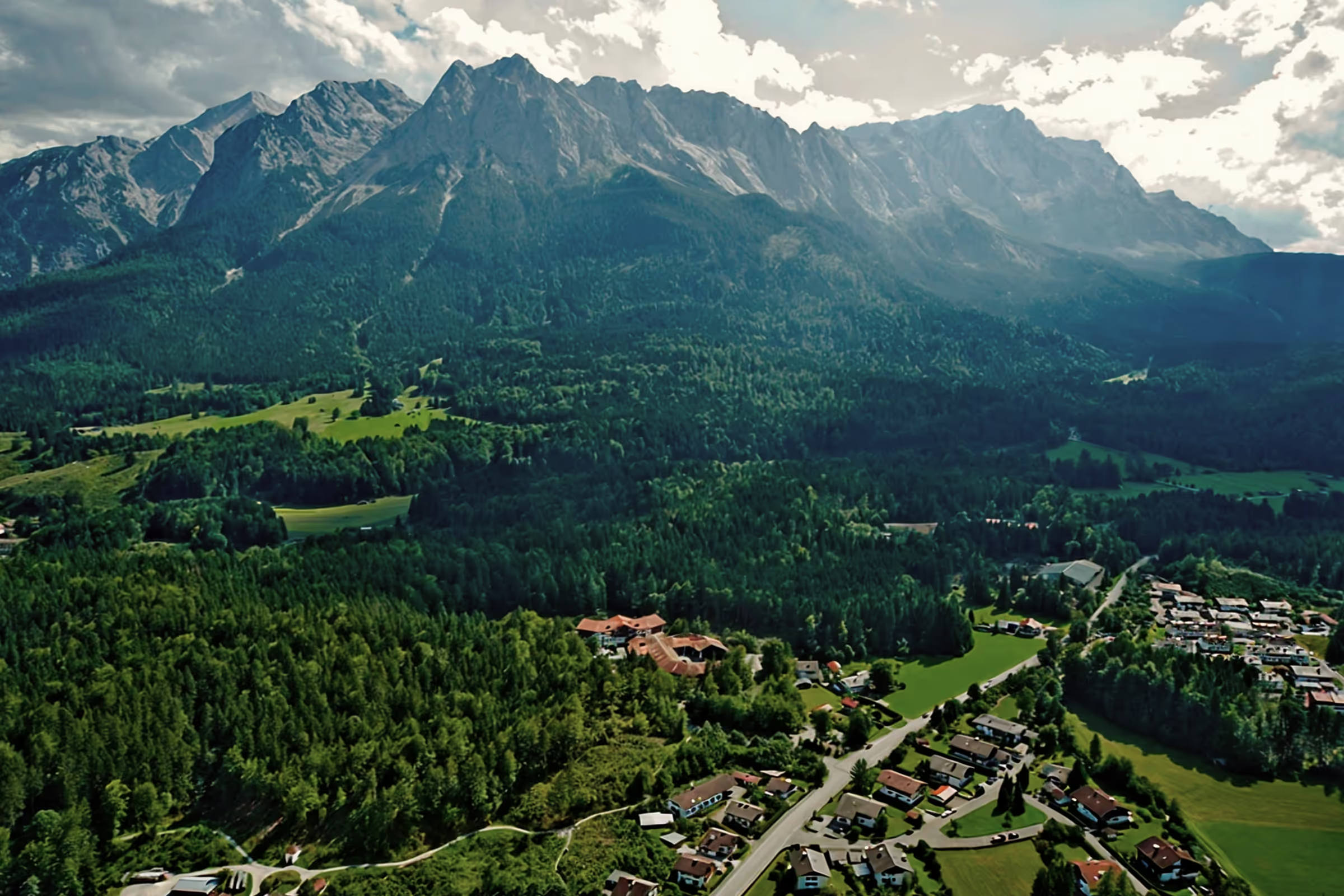
A perfect day in Grainau: To the Höllentalangerhütte via the Stangensteig

The hike to Höllentalangerhütte via the Stangensteig is one of the most beautiful mountain hikes in Grainau. The route from Hammersbach through the Höllental is known to many mountaineers who once climbed the Zugspitze on foot. Our hike took place at the end of May 2019, where the route above the gorge was still partly covered in snow.
Tour profile
Difficulty level: medium to difficult
Route length: approx. 11 km
ascents: 970 meters
descents: 970 meters
The Stangensteig is generally accessible even when the Höllentalklamm gorge is closed. However, you have to be very careful about the weather and avalanche situation. The Höllental valley is extremely dangerous for avalanches due to its steep walls; in spring, the snow remains in the narrow high valley for a long time and the sidewalks are often destroyed after winter. Between November and mid-May, the bridges and rope guards on the entire routes between Höllentalangerhütte and Osterfelderkopf were dismantled by the Alpine Club. For this reason, the route in spring is generally only accessible from mid-May at the earliest. For the opening of the hut, the paths are constantly being cleaned and refurnished.
Even in summer, the risk of falling rocks and floods in Höllental is significantly higher than on many other mountain routes. The trail is only recommended for experienced hikers who are free of heights. Our safety tips for the hiking season can be found here.

10:30 a.m.: The hike starts at the large hiking car park in Hammersbach, from here it goes along the road to the “Hammersbach” bus stop. At the chapel, follow the signs to Höllental. The weather looks quite changeable, you can feel raindrops on your skin from time to time, but with the constant climb, light rain is rather refreshing. The bright beech forest covers the trail, fresh leaves frame the valley view of Garmisch-Partenkirchen.

11:30 a.m.: After an hour, we reach the fork to Stangensteig: turn left to the entrance to the gorge, but the gorge is inaccessible to tourists until the end of May, so we turn right. It gets steep for now, but after about 10 minutes, the trail comes to a narrow surface. On the left, it goes steeply down where the water rush comes from Hammersbach. Fortunately, we are free of heights and there is also a safety rope on the right that you can hold on to if necessary. Beautiful alpine plants are now blooming on the rock wall in spring: the high-alpine primrose alpine auricle, the protected tassel flower and many others.

In addition to its tourist value, the Stangensteig also has a large historical significance for the Werdenfels region. Hammersbach was already the starting point for mining in the 15th century. In the 1840s, lead ore and zinspar were increasingly mined here, creating the miners' houses, a wooden bridge across the gorge and also the Stangensteig, which was used to transport ore in summer. At this altitude, the risk of avalanches is not uncommon even into July, which is why two tunnels were drilled in the most dangerous places, which you can still enter today (be careful — the ground is extremely slippery, it is best to only go in with a headlamp!).

It was also found that the high-alpine ore area around Hammersbach contained molybdenum — a metal that is used in steel hardening and became increasingly valuable and important during the First World War. And the Höllental mine was the only site of molybdenum found in the entire Reich region! However, after the Ministry of War in Berlin operated the mine for 3 years with tremendous effort from 1916, only 17 tons of molybdenum could be obtained. The remains of mining can still be found at the entrance to the gorge and the miners' houses are a well-known geographical location for hikers between Kreuzeck and Osterfelderkopf.

11:50 a.m.: The climb is over and we continue in a relaxed manner through the beautiful mountain forest slightly down above the Höllental Gorge to the Iron Bridge, which offers a breathtaking view of the gorge. After a short break at the bridge, it's uphill again, the trail is moderately steep and very pleasant. Although the route continues to flatten out and is easy to walk on, there is also a safety wire here - deep below us, the gorge rushes and the slope is quite steep.

12:15 p.m.: Shortly after noon, we reach the point where you have to cross the valley floor. It is now on to the final climb to Höllentalangerhütte. After the snowy winter, the valley at this point is full of avalanche snow, which has become even heavier and more crumbly due to warm air temperatures. The heavy mass of snow has developed dangerous cracks several meters deep, which we must jump over. While jumping, I hear Hammersbach rustling under the snow. Good that it's over!

The Höllentalangerhütte water power plant is located here. The hut was completely rebuilt in 2015 using the latest sustainable technologies. This abolished the two diesel engines that had been in use so far, which required 15,000 to 18,000 liters of fuel per season - the fuel had to be transported by material ropeway. After the renovation, 100% of the energy comes from the new water power plant. And the old Höllentalangerhütte with historic furnishings was rebuilt in the Alpine Museum in Munich.

Now it's back up again. Since the winter of 2018-19 was particularly snowy, avalanche damage is clearly visible here. The place looks like it was after a tornado: torn trees and large pieces of rock block the way. We slowly fight our way through and after a few meters of altitude we reach a snowfield that apparently marks today's snow line.

We don't have any skis with us, but luckily the snow is pretty firm, so we don't sink deep with every step. On areas that are already free of snow, pine trees and smaller trees lie flat on the ground due to slipping thick snow in the winter months. The snow has thus deprived the chamois found here of their most important sources of food. In order for the poor animals to survive the winter, the hunters had to scatter hay from the helicopter. The remains of hay can be seen again and again on the surface of the snow.

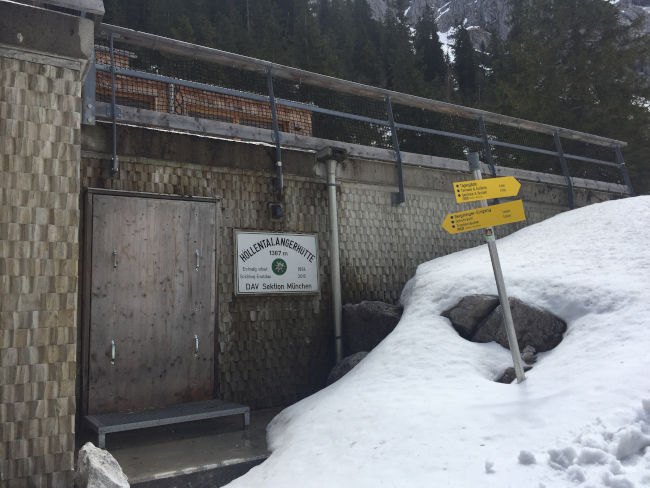
12:45 p.m.: We now reach the closed Höllentalangerhütte (1,387 m above sea level). There are no other hikers in sight and we enjoy our snack in peace and quiet. Suddenly we hear the first slight thunder sound from afar. We're not in the mood for a thunderstorm high up in the mountains and in the snow. Dann Packmas and quickly into the valley!
1:00 PM: We're running back, fortunately the weather is still holding up and it remains mostly dry. When we reach the forest line again, we notice that the forest has become very quiet — not a single bird is singing anymore! That's not a good sign. Maybe we'll still be able to get to the car dry... Just a bit more, please!

2:30 p.m.: At the bottom of the fork, we take the path to the left this time and race down through the so-called legendary forest to the parking lot. But now it's getting serious — it thunders terribly right next to us and the rain is pouring down on our heads through the forest thickets. We're running downhill as fast as we can. Just for God's sake, don't trip or slide over a tree root!

15:00 o'clock: We have finally reached the car and can relax. The clothes drip and wet the seats. My buddy asks if we're going out for a beer now. What a suggestion! Brrr. No, no beer today. Preferably a hot tea, and preferably three cups! But gladly with a shot!
Tips & info:
- The Höllentalangerhütte on alpenverein.de
- If you are planning an overnight stay at the Höllentalangerhütte, it is best to book well in advance.
- For less experienced hikers, the trail across the Höllentalklamm gorge is recommended. Please note the opening times: the gorge only opens at the end of May. More detailed information can be found here.
- Before the hike starts: “Alps for Dummies” - our safety and planning tips in the Badersee blog
Heartily Wellcome
at Lake Badersee