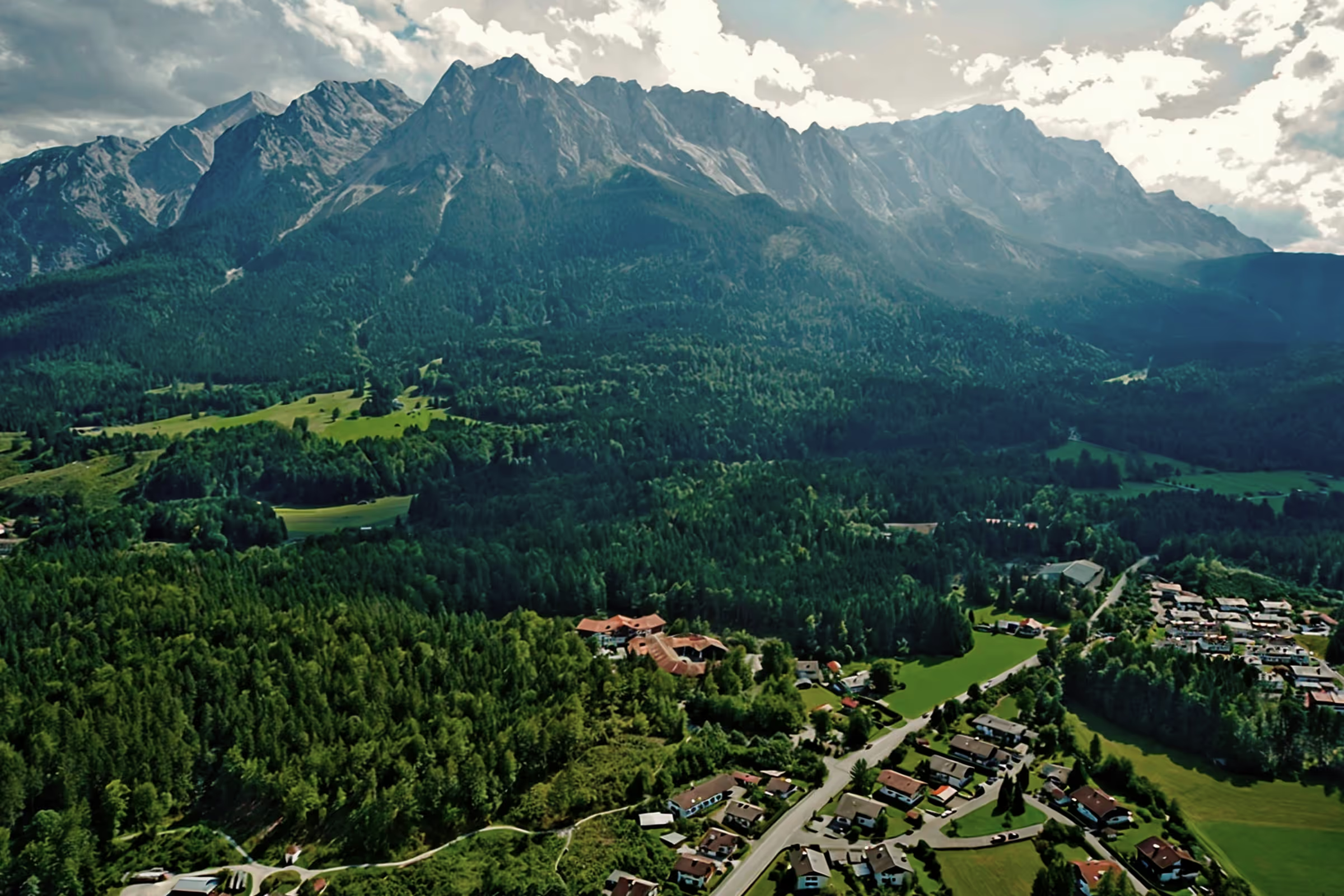
Our interview: Willi Kraus, emergency manager of the Grainau mountain rescue team

This post is in cooperation with Grainau Mountain Rescue emerged.
In 2020, Bergwacht Bayern celebrated its 100th anniversary. Today we would like to take a look at the history of mountain rescue in Grainau. The current emergency manager of the Grainau mountain rescue team, Willi Kraus, spoke to us about current topics in an interview.
Our mountains offer an exceptional natural experience for everyone and are perfectly accessible for tourism and leisure activities for mountain sports, thanks to developed hiking trails, mountain huts, cable cars, groomed slopes and an efficient and experienced mountain rescue service. Without the mountain rescue team in Werdenfelser Land, tourism development in the Zugspitze region would not be possible.
Photos © Bergwacht Grainau
Badersee blog: Mr. Kraus, Bergwacht Bayern celebrated its 100th anniversary in 2020 and you were part of this journey. What brought you personally to the mountain rescue team? How long have you been an emergency manager?
Willi Kraus: I came to the mountain rescue team through friends with whom I was traveling in the mountains and have been with me since 1984. I have been an emergency manager since 2013, before that I was Deputy Emergency Manager for 4 years.

Badersee blog: What were the most important milestones at Bergwacht Grainau? How big is the team right now?
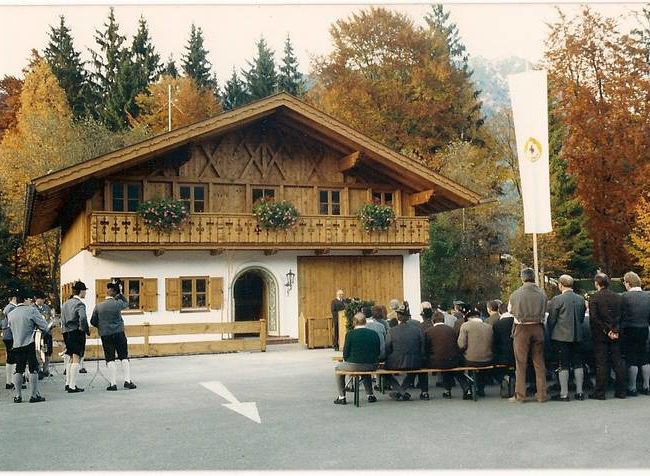
Willi Kraus: For now, the Grainau mountain rescue service was a train of BRK-Garmisch-Partenkirchen mountain rescue service, which was set up in 1945 as a result of the reorganization of emergency services by the US military government. Since 1973, the Grainau Mountain Rescue Service has been an independent agency. The mountain rescue station on Parkweg in Grainau has existed since 1989. We currently have 42 active mountain rescuers and a total of 60 members.
Badersee blog: According to “Chronik der Bergwacht Grainau”, the readiness at the end of 2011 counted 58 active members and 5 candidates. The number of mountain rescuers has therefore not increased much in recent years, which cannot be said about the number of tourists. In addition, the Grainau mountain rescue team has an extremely difficult area of operation compared to the other mountain rescue teams in Germany: high alpine, with numerous dangerous areas, including glaciers. The area is also heavily frequented by mountaineers and tourists, some of whom have no mountain experience. How can the situation be overcome? Are your current emergency personnel enough for you? Are you okay?
Willi Kraus: Our mountain rescue team has grown together with the region, depending on where the need for support was. For example, from 1962, where skiing on the Riffeldownhill had increased extremely, a service hut was planned on Riffelriss, the construction was carried out parallel to the construction of the Eibsee cable car. The hut is named after Dr. Hans Gazert, founder of the mountain accident service in Werdenfelser Land. In 1965, following a major avalanche accident on the Zugspitzplatt, the Bavarian avalanche warning service was founded, in which three Grainau mountain rescuers also participate. From 1972, the ski area on the Osterfelder was expanded with ski lifts and later in 1978 the “Alpspitz-Ferrata” via ferrata put into operation. As a result, in the summer of 1972, together with the readiness of Garmisch-Partenkirchen, the Osterfelder Diensthütte was opened at the Alpspitzbahn mountain station built. By simultaneously building the Osterfelder and Hochalmbahn Construction machinery and the transport track could also be used right away. Our area of operation has also been gradually expanded: since 2003, the Grainau mountain rescue service has been responsible for the area of Vollkarspitze to Grieskarscharte, and since 2010, the area west of the Kramerlaine up to the Oberammergau district and the state border has also been assigned to the Grainau mountain rescue area. This has to do with the fact that accident sites in this area can be reached more quickly from Grainau than from the mountain rescue house in Partenkirchen.

With the current number of members, we are well positioned, and it will be a challenge in the future to always have enough emergency personnel available even on weekdays, as more and more young people from Grainau are no longer working in the village. There is also a development that there are more and more assignments on weekdays, which is of course due to the fact that more and more people are out and about in the mountains even during the week.
Badersee blog: According to the chronicle, the Grainau mountain rescue service rejected a girl's application for admission as a candidate in 2006. Yet there are more and more women who are extremely good at skiing, mountaineering or climbing. Does your team still consist exclusively of men?
Willi Kraus: Since this year, women have also joined the Grainau mountain rescue team.

Badersee blog: According to mountain accident statistics from the German Alpine Club, there were as few accidents in 2019 as compared to the number of members 20 years ago. But there are more deaths in absolute terms. Do you notice that there are more accidents or deaths in your area of operation? What were the biggest assignments of the last year? How many missions does Bergwacht Grainau currently have per year?
Willi Kraus: There has been a slight increase in operations in recent years; the number of fatal mountain accidents is rather declining. We have around 150 assignments a year, including around 100 in the summer months. Many assignments are in the Höllental area. A major mission last year was the recovery of 5 hikers from the “Iron Age” tour. They were traveling in difficult terrain wearing shorts and sneakers.
Badersee blog: Die “Iron Age” It's a climbing tour for experienced mountaineers. Do you notice that mountaineers are taking ever riskier paths due to better equipment? Has the behavior of mountaineers and tourists changed over the years?
Willi Kraus: The number of mountaineers and hikers is increasing every year, and travel restrictions also contributed to this last summer. There are also many who are not properly equipped for the tour. Although the information available today is better than ever, there are still people on the move who don't even know where they are. Good preparation for a mountain hike is very important and should be done by everyone.

Badersee blog: On our hikes, we have often noticed that the signs in the Werdenfels region are misleading in some places. There are no signs at junctions that indicate the direction. Hiking times are misstated, which often means that inexperienced hikers need significantly more time to climb than stated and thus exhaust them because they started with different time expectations. Also on Spitzenwanderweg The signs are often missing. What does the mountain rescue team say about this? Can anything be improved here?
Willi Kraus: The signs are currently being gradually renewed by the Alpine Club. You shouldn't always rely on time information: they are actually just for guidance, because everyone goes at their own pace. (I usually travel faster.) There are some good apps where you can find lots of tours, or you can pick up a map as before — but you should be able to handle it.

Badersee blog: The mountain rescue service was created primarily to protect alpine flora. What is being done today as part of their nature conservation mission?
Willi Kraus: For us as mountain rescuers, nature conservation means first and foremost the preservation of mountains and forests. In this sense, large clean-up operations are organized, often in close cooperation with other mountain rescue teams, the fire department, the Bavarian State Forests, with the municipality or the like. For example, the “corrugated plaster” took place in 2003: At that time, 18 men collected around 3 tons of iron, sheet metal and other things in the area of tunnel windows and riffles and transported them to the Riffelriss station, where the garbage was later loaded onto the train and brought down to the valley. Such cleaning work is carried out time and again in the Zugspitze area, in Höllental and in other most visited areas in our area of operation. We are therefore happy when hikers make sure that they do not leave any traces of themselves in nature (garbage, dog droppings,...). It is also important to stay on the marked trails: abbreviations damage the vegetation and when leaving the marked route, you may get lost and cause an otherwise unnecessary rescue operation.

Badersee blog: By the way, it is good for our readers and hotel guests to know: Do you then have to pay for the assignment yourself?
Willi Kraus: Yes, in the case of recovery that is not medically necessary — i.e. not carried out due to an injury — the costs must be borne by yourself. However, the costs can be covered by additional insurance or DAV membership.
Badersee blog: As a mountain ranger, what do you think of the solstice fires?
Willi Kraus: In Grainau, we talk about the Johannifeuer, which has a long tradition in our village; most fires are ignited with rapeseed oil, so that almost no residue remains. If they do, they are usually cleaned up in the following days.

Badersee blog: The mountain rescue team needs good equipment, for every season. To what extent do private donations help finance them?
Willi Kraus: Some of our equipment is financed through donations, e.g. all clothing is purchased by Willschaft itself.
Badersee blog: In the chronicle, we came across the following story: “In 1980, a Bonn family left 101 bottles of whiskey to the ready. Some of these are sold by the bottle or tamper at the 1st Christmas Market on Untergrainau village square. The rest is certainly not spoiled.” What can the mountain rescue service accept as a donation? And what can you — or shouldn't — donate?
Willi Kraus: The mountain rescue service can accept donations in kind or money; the issue with the whiskey bottles has been unique so far. With monetary donations, we can of course always obtain what is currently needed.

Badersee blog: Thank you for your time and a very informative interview Mr. Kraus! We wish Bergwacht Grainau a good and safe year 2021!
The Grainau mountain rescue team is looking forward to your support
Support Bergwacht Grainau with a donation or as a long-term sponsor. On behalf of all mountain rescuers, we would like to thank you!
BANK: Kreissparkasse Garmisch-Partenkirchen
BIC: BYLADEM1GAP
IBAN: DE62703500000000012252
Heartily Wellcome
at Lake Badersee